

Sections
Worthy and Willing: Forming Boys Who Will Want to Marry
Forming Boys Who Will Become the Type of Man Who Will Want to Be and Work to Be the Type of Man Your Daughter Will Want to Marry
The Type of Man You Would Want Your Daughter to Marry
The Heights School takes a distinctive approach to the formation of boys and young men: “Heights parents and faculty work together to form boys into the type of men they would want their daughters to marry.”1 This idea is a guiding principle found in the headmaster’s open house speeches, in HeightsCast episodes going back a decade, and even in the Student-Parent Handbook.
What kind of man is this? This is the kind of man who is willing to put the needs and desires of his wife and children before his own. This is the kind of man who has become not only capable of but also familiar with self-sacrifice. The kind of man we have in mind is a prudent man, steeped in wisdom, who is willing to put in hard work for his wife and family in order to provide for their temporal, corporeal, intellectual, moral, and spiritual needs. This man understands that love is not merely a feeling but a vocation which will involve the resolve of his will and to which he will respond with his whole heart, a calling that will involve his whole self and the whole of his life. Moreover, throughout his time at The Heights, this kind of man will have experienced the joy that comes from a sincere gift of himself in service to his friends, his family, and the community and society at large. A man such as this is also precisely the type of man we would want to become leaders in our communities, businesses, parishes, and schools.
The man who is best prepared for marriage will also be best prepared for the life of consecrated celibacy for the sake of the Kingdom of God. Marriage and intentional celibacy represent two ways of living an authentic gift of self as a mature man or woman.2 We strive to form our boys into the kinds of men who will be good candidates for both marriage and consecrated life, whether lay or religious.
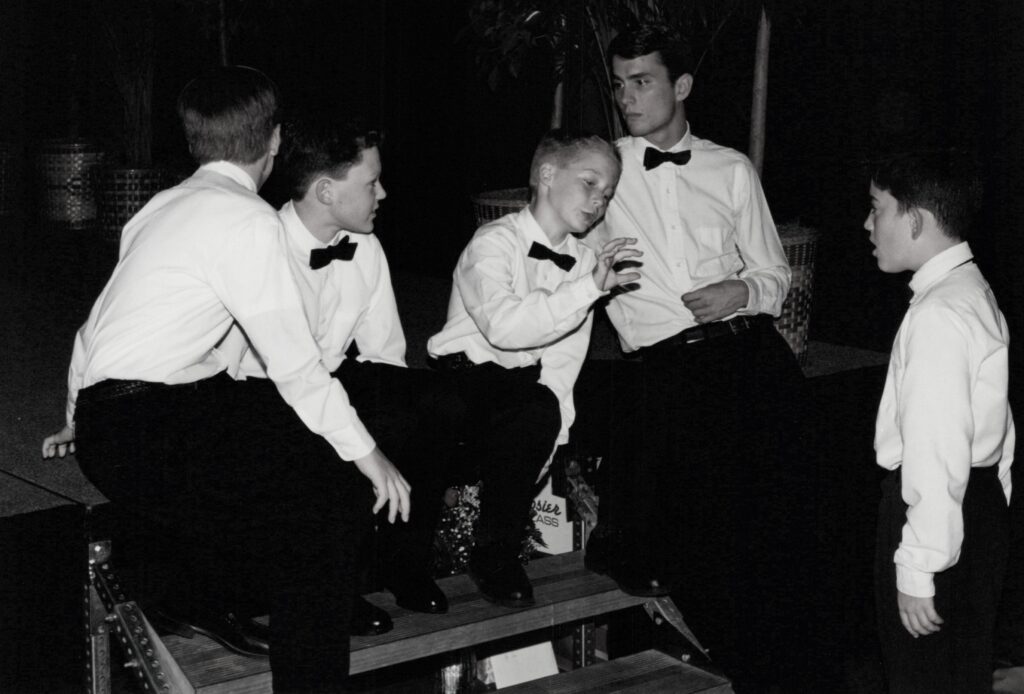
The Type of Man Who Will Want to Marry Your Daughter
My purpose for the remainder of this essay is to flip the perspective. It is fruitful to describe the kind of man whom a parent “would want to marry their daughter,” but perhaps even more fruitful as an educational frame would be to ask, “What kind of man would want to be married?” Who would desire to accept the responsibilities and sacrifices of the vocation to marriage and family life? Moreover, how will his heart be formed to recognize and see the worth and value of a woman as a particular person worthy of his sacrifices?
I propose, as a complementary goal to the one currently in our Handbook, that Heights parents and faculty also work together to form boys into the type of men who will want to marry. The focus then shifts from our approval of a certain kind of man being worthy of our daughter to the inner life of that man, his moral imagination, and the formation of the affective dimension of his heart. It shifts our focus onto the kind of desires that are cultivated and sanctioned by his will and his growth as a man who in freedom is able to recognize, desire, and choose that which is objectively good and noble about human love and sexuality. As parents and teachers, forming boys who will freely choose to marry, who are prepared to seek and find their vocation, is not ancillary to our mission and pedagogy but an essential part of it.
Rather than simply giving our sons and daughters “the talk” regarding sex and marriage, we need to be working in an ongoing way to help them integrate their God-given desires to love and be loved into the goal of becoming men and women worthy and willing to take on the grand adventure of marriage and family life when they mature into young men and young women.3 This means “to form men and women who are prepared to embrace the positive adventure that love entails. We need to help our children be daring so that, when they are sent into the world, they will be prepared to live out that crusade of manliness which our world needs, and to undo the savage work of those who see man as merely a beast.”4
The pursuit of a spouse requires clarity regarding one’s aims and a concrete willingness to act rather than to be a passive recipient of what may happen in one’s life. This action relies on the initiative of men who are willing to take risks, be turned down, and do the hard work of seeking out a spouse as well as working on themselves to become more and more the kind of man whom the kind of woman they want to marry will accept. He must accustom and prepare himself with virtuous action to risk rejection, pursue a woman with courage, and do the hard work of becoming the kind of man she will want to marry, the kind of man who will be a good and generous husband and father. It is also necessary that he be prudent and industrious in providing for the temporal goods whereby he will, in collaboration with the gifts given to him by God, provide for the needs of his family.5
Courage and initiative in self-giving are not merely social skills or marks of confidence. They are the virtues particularly important for the masculine way of being in the world and are an expression of the capacity and desire for self-gift, the way to authentic and lasting communion and fulfillment.6 This habitual outward giving is an expression and a living out of what we can call the “masculine genius,” which is complementary to the “feminine genius” spoken about at length by Pope St. John Paul II: “In the same way that Mary is upheld by the Church as the highest expression of this ‘feminine genius’ in her total gift of self to God, man [as male] becomes the highest expression of a masculine genius when he, according to his own idiom, makes himself a total gift to God through his self-sacrifice for the sake of others. Just as she, by making herself a handmaid, began her rule as Queen of Heaven, so a man exercises his earthly authority in a constant gift of himself for the good of those within his power to serve.”7 The man who learns to risk rejection, to discipline himself, and to pursue a woman with honor is already being trained in the habits that make married love possible. In his papal encyclical Familiaris Consortio, John Paul II called attention to the particular way in which married love is ordered towards love as self-gift. Although marriage can fulfill a deep longing of the human heart, it does so precisely as a way whereby a husband and a wife live out love’s “deep inner dynamism.” He goes on, “Fruitful married love expresses itself in serving life in many ways. Of these ways, begetting and educating children are the most immediate, specific, and irreplaceable. In fact, every act of true love towards a human being bears witness to and perfects the spiritual fecundity of the family, since it is an act of obedience to the deep inner dynamism of love as self-giving to others.”8 Seemingly small acts of courage and pursuit of authentic goods ordered to the love of God and love of neighbor are in fact the first movements of a man learning to give himself entirely.
The Cultural Landscape
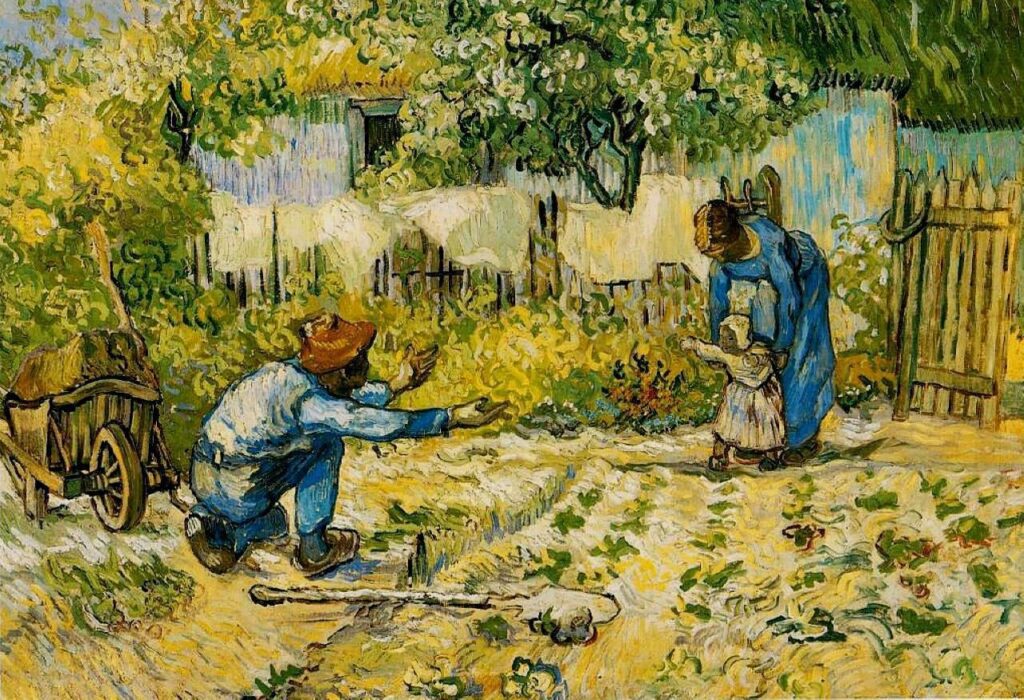
According to the Pew Research Center, among Americans aged 18 to 34 who have never been married, about 69% reported they do want to marry someday.9 However, this want alone is not enough; to be realized, it must be translated into deliberate action, undergirded by a strong and resolute will. Historically, and still today, the path to marriage has relied largely on the initiative of men who take risks in the pursuit of marriage as a worthy goal. Romantic comedies such as When Harry Met Sally, Sleepless in Seattle, or You’ve Got Mail have portrayed romantic love as something that merely ‘happens’ to men and women while they are doing other things. However, like the pursuit of an advanced degree or becoming skilled in a trade, to marry often requires deliberation, intentionality, and sustained effort.
Between 1980 and 2021, there has been a significant increase in the number of 40-year old-adults who have never been married, from just 6% to 25% according to a 2023 research report from the Pew Research Center. The percentage of never-married 40-year-old men was found to be even higher than this, standing at 28%. According to senior researcher Richard Fry, both men and women “born from the 1960s onward have been increasingly delaying marriage, and a growing share are forgoing it altogether.”10 An expanding amount of social scientific research is drawing attention to cultural shifts that have contributed to these demonstrable demographic changes. Marriage, which has for millennia been widely recognized as a human good and a defining aspiration of adult life, is now more commonly regarded as a private lifestyle choice, one that may be pursued or forgone without serious personal or social consequence. Modern cultural patterns reflect this profound shift. Many men and women no longer regard marriage and family life as one of life’s highest goods and priorities even while they still, by and large, see it as a good, perhaps on par with other equally desirable goods for a happy and satisfying life. Even among those who do see it as such, the changing cultural landscape often leaves young adults without the character and foresight needed to pursue it effectively.
For decades, young people (and women in particular) have been told, either directly or through cultural messaging in entertainment and media, to pursue alternative goals for their lives and to delay or put off marriage altogether. While there are many factors that are contributing to these cultural trends, a significant one is the growing “me first” attitude in which the prospect of marriage is fraught with tremendous risk to one’s own personal happiness.11 And the risks of isolation, despair, and alienation are growing with the proliferation of both readily available pornography and AI-generated “companions” which are increasingly sapping young men of their strength and drive to form real relationships with real women. As psychology professor Jean M. Twenge relates, “AI girlfriends and boyfriends now offer the prospect of ‘relationships’ with an always-available entity that has no needs of its own.”12 Recent studies have found that men are far more likely than women to seek out a relationship with an AI bot, one in which the perceived risk is low.13 Surveys have consistently found that roughly three-quarters of AI romantic companion users are men, with some studies reporting it as high as 80%. And among young men, surveys have found that more than one in four have tried out an AI partner at least once.14
The work of Dr. Debra Soh, a neuroscientist whose work has focused on the biological foundations of sex differences and human behavior, is particularly relevant and illuminating. Her book Sextinction: The Real Threat to Humanity, published in February 2026, explores how ideological trends, modern technology, and shifts in dating culture are associated with declining relational connection and engagement, providing insight into the growing challenges that young men and women face in forming committed relationships. Soh shows that technologies such as video games, social media, and online dating platforms, while offering forms of engagement, can foster a semblance of connection that leaves a man robbed of the motivation to seek real engagement with real people and the real world. These virtual spheres, by providing low-risk interaction, often diminish the inclination toward the real-world relational courage and responsibility that have traditionally prepared young men for the commitments of dating, marriage, and family life. Soh identifies one of the major consequences of “pornography, artificial-intelligence-driven companions, and purchased nudes is that they remove men’s desire to better themselves so that they can attract a real-life partner. Pornography eases sexual frustration that would otherwise serve as useful male motivation. Porn dissuades men from doing difficult things, like taking risks and pushing themselves to be successful, because they know, in the back of their minds, that they always have an escape hatch.”15 She further points to the phenomenon of hikikomori in Japan as a potential warning sign, noting that it represents a growing number of young men who withdraw from education, work, and relationships in favor of a largely virtual existence.16
Rather than risk pursuing a relationship with a woman in a way that is ordered to marriage and family life, many men are choosing to go it alone. They are being duped and swindled by counterfeits which satisfy basic anthropological needs for relationship and communion. They are in danger of becoming isolated and depressed as their virility is sapped by the efforts of behemoth industries intent on keeping them dependent on virtual connections rather than real relationships.17 Moreover, there are several prominent voices today encouraging them to go it alone. With the tremendous projected growth in AI companionship, the messaging and trends will likely be pushing more men towards forgoing reality for virtual reality.18 Brad Wilcox, senior fellow at the Institute for Family Studies, summarizes this alarming trend: “For a long time, women have been encouraged to live their best lives and embrace education, work, and freedom from family life. What’s striking today is we’re getting that same message for men, as well.”19 Wilcox’s observation highlights a profound shift in how young men perceive courtship, marriage, and intimacy. Without our intentional intervention as parents and educators, this shift is likely to affect our students, sons, and daughters as technology offers easier alternatives to real-world relationships.
The trends away from marriage and family life are alarming far beyond the question of demographics; they strike at the heart of the personal well-being and flourishing of men and women as well as the broader communities which would benefit from their involvement. Brad Wilcox has found that the benefits of marriage are particularly pronounced for men since they are at the greatest risk of social isolation and its accompanying dangers if they do not marry: “Married men are more financially secure, happier, and less prone to succumbing to deaths of despair. There is also decent evidence that some of the benefits of marriage for men flow from the ways in which marriage as an institution protects men from loneliness, meaninglessness, and helps them work smarter and more successfully.”20 Helping young men and women to see marriage and family life as desirable and good is a vital social imperative.
When men and women do not marry and instead choose to go it alone, this also has an effect on the health and vibrancy of our civic and ecclesial communities. The Institute for Family Studies, headed by Wilcox, has found that “there is a substantial divide in community activities between married and unmarried adults. This is not just an artifact of age or education differences either. Married adults between the ages of 25 to 49 are far more likely to attend a community meeting, do local volunteer work, and visit a library. They talk to new people in their communities more often as well.”21 For their own good and for the good of our civilization, we must raise men who freely desire marriage.
How We Got Here: A Crisis of Vision
The boys and girls whom we educate in our schools today are imbibing predominant cultural ideas that make marriage, and even romantic relationships, seem more troublesome than they are worth. A range of culturally formative media over the past three decades has contributed to reshaping the imagination of adulthood in ways that subtly relativize marriage. Sitcoms such as Friends and How I Met Your Mother normalize prolonged singleness and romantic indecision into one’s late thirties, while series like Sex and the City present fulfillment as attainable through career achievement, sexual autonomy, and friendship apart from permanent commitment. More recent shows such as Euphoria and Love Island intensify this pattern, portraying relationships as fluid, experimental, and largely untethered from any enduring horizon of commitment and responsibility. Reality formats such as The Bachelor dramatize marriage as the culmination of romantic spectacle rather than the fruit of love that matures from self-seeking to self-gift. Together, these narratives do not directly cause the demographic changes we have seen, but they function as a form of cultural pedagogy, shaping the moral imagination of young adults by presenting marriage less as a normative telos of adulthood and more as one lifestyle option among many competing goods.
There is a vocational crisis underway, and it is not where we might first expect. When we hear the words “vocations crisis,” our thoughts most often go to the vocations of priesthood and consecrated life. Today, however, there is an equally serious and more fundamental vocations crisis among both men and women, “a crisis of fewer and fewer young people who are willing to enter into the sacrament of Matrimony.”22 Educator Matthew Anderson summarizes what lies at the root of this crisis, a crisis of desire: “Many young people do not want to get married because they cannot see any good that could justify the risks, and the work, required of marriage.”23
Considerable headwinds are confronting both boys and girls to dissuade them from seeing marriage and family life as noble and good. Contemporary discourse, especially within parts of the so-called “manosphere,” often portrays marriage as a risky venture, emphasizing potential loss of freedom, financial risk, and emotional vulnerability. While acknowledging the potential dangers in marriage and family life is important, particularly so that one may date and marry prudently, these unbalanced echo chambers can affect the hearts and decisions of the young in a particularly debilitating way. The end result is pusillanimous boys and young men who lack a desire for greatness and who see the good to be attained as worth the risk entailed in its pursuit. The consequence is an anticulture in which fear, cynicism, and mistrust can take root in the hearts of boys before they have had the opportunity to encounter the beauty, nobility, and transformative power of marital life and love.
What to Do Now: Supply a True Vision
Today there is indeed a crisis in masculinity and a corresponding crisis in marriage and family life. Samuel T. Wilkinson, an Associate Professor of Psychiatry at Yale School of Medicine and a leading researcher in depression and suicide prevention, writes, “What is to be done to overcome the crisis of masculinity? …[I]f marriage and fatherhood are not part of the conversation, then we are missing the mark. This is how men are psychologically and evolutionarily wired. It’s a function of how they were created.”24 Men were created for the responsibilities and the joys of becoming husband and father, or for a total self-gift in a state of intentional celibacy, in which the same paternal and generative love is lived out in some form of spiritual fatherhood. The boy who learns about himself as a part of this glorious world can begin to see his generous role in turn. And, through an education which stirs up his natural desires for magnanimity, a boy can grow into the kind of man who not only is capable of fatherhood but who sees it for the great adventure that it is.
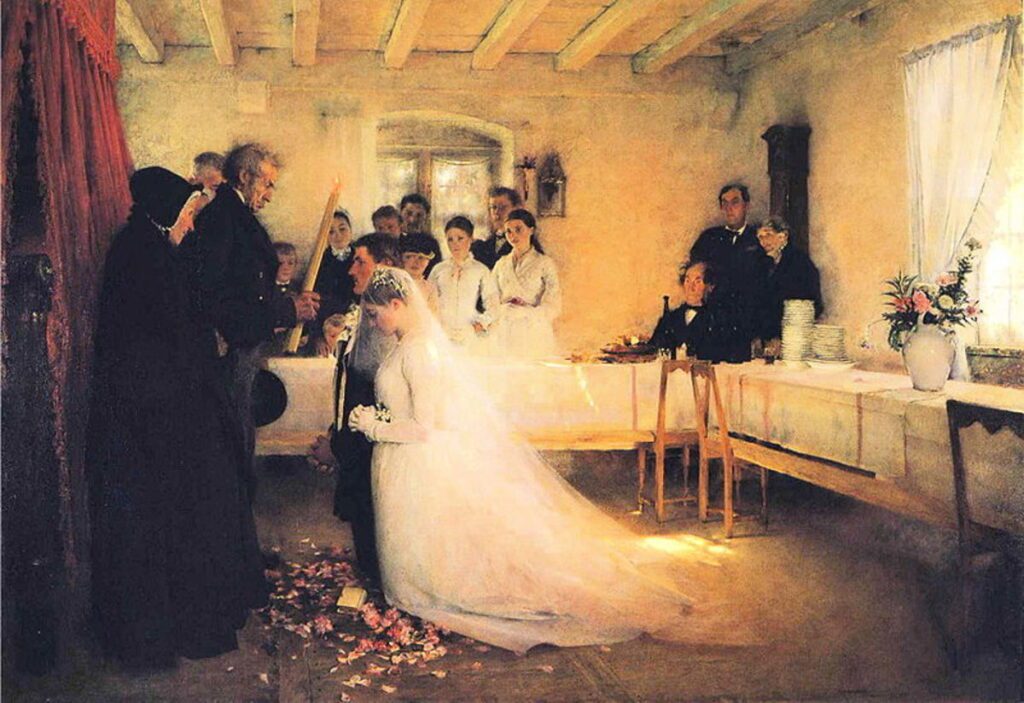
But this is not how contemporary boys and girls are typically introduced to the idea of marriage and family life. Kristen Ziccarelli writes, “If we think our birth is an accident rather than a gift from God, how can we possibly think of children as more than an obligation?” Ziccarelli recommends a renewal in vision which can be accomplished by working together as parents and educators for the full flourishing of the human heart and the awakening of the desire for greatness within it: “What’s needed is a renewal of vision, beginning with recovering a sense of the sacred in human life, where we open our hearts to mystery, to the transcendent, to miracles. Art, music, nature, prayer, and community are important conduits of culture, and have the power to convey the ancient wisdom that children are gifts and expressions of hope.”25 Part of the antidote is to supply that vision with vivid examples that will live in a boy’s imagination throughout his life.
Boys are attracted, by nature, to stories of heroism and bravery. They are attracted, by nature and from a young and tender age, to imitate men who are strong in character. One of the forms of risky play identified by researchers is vicarious play, which is watching others engage in age appropriate and healthy risk-taking—which can be done through living examples and, in the same way, through reading good literature. Literature can provide an insight into marriage and family life that allows young men and women to encounter, imaginatively, the risks and rewards of self-giving love before they must assume those risks themselves. Through narrative, they witness courtship, sacrifice, fidelity, misunderstanding, reconciliation, and fruitfulness.26 This does not eliminate fear but helps them to navigate the unknown by making it intelligible and also contributes towards making the demanding sacrifices of life attractive. By living the drama of life vicariously through literature, young people rehearse in their own hearts and minds the courage, patience, and hope that marriage requires. Literature, especially novels and poetry, can thus be a kind of moral preparation, forming the affections and strengthening the will for the real adventure of covenantal married love and family life.
To cultivate this formation practically, reading can guide boys toward not only a mature understanding of love but also to an age-appropriate awakening of their hearts to the beauty, romance, and wonder of real love, and to a deep reverence for marriage and family life. In July 2024, Pope Francis gave the Church a letter on the role of literature in formation which is very apropos. Originally written with the intention of guiding priestly formation, he expanded it to include all the faithful and to exposit the “value of reading novels and poems as part of one’s path to personal maturity.”27 Francis reminds us that literature “has to do, in one way or another, with our deepest desires in this life, for on a profound level literature engages our concrete existence, with its innate tensions, desires, and meaningful experiences.”28 Literature is not merely entertainment; it is a means of moral and imaginative formation. In the words of C. S. Lewis, “In reading great literature I become a thousand men and yet remain myself. Like the night sky in the Greek poem, I see with myriad eyes, but it is still I who see. Here, as in worship, in love, in moral action, and in knowing, I transcend myself; and am never more myself than when I do.”29 Pope Francis also pointed out the following truth: “Time spent reading may well open up new interior spaces that help us to avoid becoming trapped by a few obsessive thoughts that can stand in the way of our personal growth.”30
Because boys are, on average, less likely than girls to sustain attentive engagement with books, the use of audiobooks or reading aloud at home or in class (especially for the lower grades) can help draw them into the text and form in them the habits of attention and receptivity upon which a fuller experience of love depends. It is still critically important to invite boys into the world of literature and poetry. Francis continues, “Unlike audio-visual media, where the product is more self-contained and the time allowed for ‘enriching’ the narrative or exploring its significance is usually quite restricted, a book demands greater personal engagement on the part of its reader.”31 This is true to a great degree even when the story or poem is heard rather than read directly from the page, since the listener must still actively receive, imagine, and interpret what is given in the spoken text.
A list of books on The Heights website provide a ready foundation for such a curriculum.32 Those recommended for lower school audiences (grades 3, 4, and 5) introduce students to more complex adventures and moral choices and present vivid and attractive images of self-sacrifice, fidelity, and perseverance within the context of family, friendship, and community. As the student moves into the middle and upper grades, the works invite students to reflect more deeply on the nature of love, the meaning of self-gift, and the enduring beauty of marriage and fidelity across the whole of a life. Stories such as Kristin Lavransdatter by Sigrid Undset, The Brothers Karamazov by Fyodor Dostoyevsky, The Divine Comedy by Dante Alighieri, and The Lord of the Rings by J. R. R. Tolkien lead students to confront the full moral and spiritual stakes of love, marriage, and family, as well as the transformative power of virtue and grace.33 It is also very fruitful for parents to read these books alongside their boys and to share the adventure and discovery (and rediscovery) with them.
Immersion in the great literary tradition can be a means of vicarious rehearsal, allowing boys to witness patience, courage, and fidelity in action—or the consequences of their opposites—which forms their affections and strengthens their will for the real adventure of covenantal love and family life. Such a literary formation complements an encounter with the real in the other aspects of the education and formation of our boys.34
Along with Christ, the male saints also offer models in whom we see this kind of man. It is perhaps St. Joseph who gives us the best model for raising boys who will become the kinds of men whom we would want our daughters to marry. As Stratford Caldecott describes him, “In St. Joseph, justice is combined with tenderness, strength and decisiveness with flexibility and openness to the will of God…. He is an adventurer, too, like the ‘questing knights’ of later legend.”35 This vision finds a striking echo in a reflection on fatherhood by Charles Péguy: “There is only one adventurer in the world, as can be seen very clearly in the modern world, the father of a family. Even the most desperate adventurers are nothing compared with him. … He alone is literally ‘engaged’ in the world, in the age. He alone is an adventurer. The rest are at most engaged with their heads, which is nothing. He is engaged with all his limbs.”36
In his book Defending Boyhood, Anthony Esolen writes, “Boys will not clear a bar set low. That is a paradox of their nature. They will not rise to the mediocre occasion. They fall below it. They do not need assistance and hand-holding. They need challenge and danger. That is the testimony of every human culture.”37 Living and literary examples of heroic men raise that bar.
Finally, marriage can be seen and desired as a joyful and life-giving vocation only when the moral imagination can perceive certain truths. Pope St. John Paul II often reminded us that the heart must be educated and purified to perceive the spousal meaning of the human body: “The vocation to marriage is written into the very nature of man and woman as they came from the hand of the Creator.”38 If a man sets aside this vocation for the higher calling of remaining single for the sake of the Kingdom of Heaven, then such a man will understand that this form of life too is meant to be lived out through a gift of self to God and neighbor.39 In addition to literary formation, boys at a certain age can be guided toward an understanding of the goodness and meaning of the sexual difference (“male and female He created them,” Genesis 1:27 and 5:2) through introduction to the foundational truths contained in more advanced theological and philosophical works. High school boys in particular can be introduced to key and foundational truths found in Pope St. John Paul II’s Love and Responsibility and through an age appropriate introduction to his broader exegetical and philosophical work, Man and Woman He Created Them: A Theology of the Body.40 Edward Sri’s Men, Women, and the Mystery of Love: Practical Insights from John Paul II’s Love and Responsibility is an appropriate place to start for those parents and other educators who are looking for a way to introduce high school age students and other young adults to these more advanced texts.41
A Final Word on Formation
If we hope to form men who are capable of courage, fidelity, and generosity, we must counter the narratives which would have our boys cower in fear before the prospect of marriage and family life. We can do this by cultivating imagination, moral discernment, and a vision of marriage that embraces both its challenges and its profound rewards. By providing frequent living examples through personal stories, good literature, and through personal mentorship, we help young men see that the adventure of covenantal love, though demanding, is one of the most noble and transformative callings to which a human being can respond. We need to work to educate men who will experience within themselves the desire for the adventure of married life. And if this is what we want them to see, then we need to model it. We need to show them, primarily through what we are, how we speak about our married life, and the stories we share, that marriage and the family really is a way of fulfillment through a daily gift of self. And we have to work ourselves to ensure that our marriages and our families are indeed and remain our top priorities and the greatest joys of our lives.
References
- The Heights School, Student/Parent Handbook.
- Cf. John Paul II, Familiaris Consortio, apostolic exhortation (Holy See: November 22, 1981), §16.
- “God created man in His own image and likeness: calling him to existence through love, He called him at the same time for love. God is love and in Himself He lives a mystery of personal loving communion. Creating the human race in His own image and continually keeping it in being, God inscribed in the humanity of man and woman the vocation, and thus the capacity and responsibility, of love and communion. Love is therefore the fundamental and innate vocation of every human being.” John Paul II, Familiaris Consortio, §11.
- “The Talk and Beyond,” The Heights Forum, show notes for interview with Michael Moynihan, May 6, 2022.
- Cf. Alvaro de Vicente, “The World Needs Your Son to Be Professionally Ambitious,” The Heights Forum, January 27, 2026.
- Cf. Second Vatican Council, Gaudium et Spes, pastoral constitution (Holy See: December 7, 1965), §24.
- Peter Holmes, “Is There a Catholic Theology of Masculinity?”, PhD diss. (The University of Notre Dame Australia, 2021), 86.
- John Paul II, Familiaris Consortio, §41.
- Carolina Aragão, “Among Young Adults Without Children, Men Are More Likely Than Women to Say They Want to Be Parents Someday,” Pew Research Center, February 15, 2024.
- Richard Fry, “A Record-High Share of 40-Year-Olds in the U.S. Have Never Been Married,” Pew Research Center, June 28, 2023; Cf. Steven Ruggles, “Marriage, Family Systems, and Economic Opportunity in the USA Since 1850,” in Gender and Couple Relationships, ed. Suzanne M. McHale et al. (Cham, Switzerland: Springer International Publishing, 2016).
- Cf. Jean M. Twenge, “The Marriage Effect,” The Atlantic, September 3, 2025; Cf. Joan Fawley Desmond, “‘Me First’ to ‘Family First’: Brad Wilcox ‘Gives Voice to the Value of Marriage,’” The National Catholic Register, April 3, 2024.
- Jean M. Twenge, “The Marriage Effect.”
- Jeeva Shanmugam, “AI Girlfriend App Statistics by Usage, Adoption and Facts (2025),” Sci-Tech Today, March 5, 2026; Cf. Ronald E. Riggio, “Can an AI Companion Substitute for Real Human Relationships?”, Psychology Today, August 26, 2025.
- Jeeva Shanmugam, “AI Girlfriend App Statistics (2025).”
- Debra Soh, Sextinction: The Decline of Sex and the Future of Intimacy (New York: Threshold Editions, 2026), 77.
- Hikikomori is a relatively recent Japanese term referring to extreme social withdrawal and reclusion. “Fertility experts have been hysterically pointing at Japan’s hikikomori as an example of the doomsday the West may soon become: one million young men who don’t go to school, don’t work, don’t date, and instead choose to live in their parents’ home, playing video games and scrolling online.” Debra Soh, Sextinction, 71.
- Cf. Manuela Barreto, Christina Victor, et al, “Loneliness around the world: Age, gender, and cultural differences in loneliness,” Personality and Individual Differences, vol. 169, February 1, 2021. This recent study used data from 46,054 people as part of The BBC Loneliness Experiment, concluding that males reported higher feelings of loneliness than females. In particular, adolescent and adult males were more likely to be lonely; Cf. Alex Marceau, “Male Loneliness Epidemic: Research, Myths, and Coping Strategies,” reviewed by Jennifer Litner, Healthline, March 20, 2026; Cf. Vivek H. Murthy and Office of the U.S. Surgeon General, “Our Epidemic of Loneliness and Isolation: The U.S. Surgeon General’s Advisory on the Healing Effects of Social Connection and Community,” 2023. This report notes that loneliness and social isolation are bigger risk factors for suicide in men than for women; Cf. Adam England, “Why the Men’s Suicide Rate Is So High,” reviewed by Ifeanyi Olele, Healthline, January 29, 2026. In 2022, nearly 4 in 5 deaths by suicide in the United States were from males.
- “The global AI Girlfriend App market is projected to rise from USD 2.7 Billion in 2024 to USD 24.5 Billion by 2034 at a 24.70% CAGR during 2025 to 2034.North America is estimated to lead in 2024 with 35% share, reported at USD 8.64 Billion in revenue.” Jeeva Shanmugam, “AI Girlfriend App Statistics (2025).”
- Brad Wilcox quoted in Joan Fawley Desmond, “‘Me First’ to ‘Family First.’”
- Brad Wilcox, “Why Marriage Is Good for Men,” Institute for Marriage Studies, June 10, 2024.
- Daniel Cox, “The Societal Cost of the Marriage Decline,” Institute for Marriage Studies, 5 March 2024, https://ifstudies.org/blog/the-societal-cost-of-the-marriage-decline.
- Matthew Anderson, “We Have Another Vocations Crisis: The Sacrament of Matrimony,” National Catholic Register, November 2, 2023.
- Matthew Anderson, “We Have Another Vocations Crisis.”
- Samuel T. Wilkinson, “Perspective: What science tells us about fatherhood, marriage, and the struggles of young men,” DeseretNews, March 12, 2025.
- Kristen Ziccarelli, “Disenchantment and the Demographic Decline,” The Catholic Thing, January 27, 2026.
- Such books to consider include The Odyssey, Pride and Prejudice (1813), Jane Eyre (1847), A Tale of Two Cities (1859), Anna Karenina (1878), and many others.
- Francis, Letter on the Role of Literature in Formation, (Holy See: July 17, 2024), §1.
- Francis, Letter on Literature in Formation, §6.
- C. S. Lewis, An Experiment in Criticism (Cambridge: Cambridge University Press, 1961), 89.
- Francis, Letter on Literature in Formation, §2.
- Francis, Letter on Literature in Formation, §3.
- Cf. “Heights Books,” The Heights School; Cf. “Summer Reading,” The Heights School.
- “They can learn from Dante that the love of man and woman is a glorious motif in the symphony of love fashioned by him who moves the sun and the other stars.” Anthony Esolen, “Finding the Masculine Genius,” interview by ZENIT, EWTN, April 23, 2007.
- To learn to see love for what it is opens the eyes to the most foundational truth of reality. As D.L. Schindler has put it, “Love is the basic act and order of all things because all things are created by God.” David L. Schindler, Ordering Love: Liberal Societies and the Memory of God (Grand Rapids, MI: Wm. B. Eerdmans Publishing, 2011), 5.
- Stratford Caldecott, quoted in Tracey Rowland, “The Chivalry of St. Joseph,” Columbia Magazine, March 1, 2021.
- Charles Péguy, “Clio I,” in Temporal and Eternal, trans. Alexander Dru (Indianapolis: Liberty Fund, 2001), 108.
- Anthony Esolen, Defending Boyhood (Charlotte: TAN Books, 2019), 157.
- Catechism of the Catholic Church, 2nd ed. (Holy See: Libreria Editrice Vaticana, 1997), §1603.
- “Esteem of virginity for the sake of the kingdom and the Christian understanding of marriage are inseparable, and they reinforce each other.” Catechism, §1620.
- Cf. John Paul II, Love and Responsibility, trans. H. T. Willetts (San Francisco: Ignatius Press, 1993); Cf. John Paul II, Man and Woman He Created Them: A Theology of the Body, trans. Michael Waldstein (Boston: Pauline Books & Media, 2006).
- Cf. Edward Sri, Men, Women, and the Mystery of Love: Practical Insights from John Paul II’s Love and Responsibility, (Cincinnati: Servant Books, 2007).
About the Author
Dr. Joseph Lanzilotti
Dr. Joseph Lanzilotti joined The Heights School faculty in 2022. He holds a Bachelor of Science degree in Biology with a second major in Philosophy from DeSales University, a Master of Arts degree in Theology from Ave Maria University, and a Doctor of Philosophy (PhD) degree in Theology from the Pontifical John Paul II Institute for Studies on Marriage and Family. Having grown up in rural New Jersey, Dr. Lanzilotti developed a great love for the natural world. He is a beekeeper and gardener. He enjoys trail running, swimming, and skiing. Joseph and his wife, Caeli, have a two-year-old son. They reside in Reston, VA.