

Sections
The Magisterial Case for Single-Sex Education
On October 27, 2025, Pope Leo XIV released his second apostolic exhortation, Drawing New Maps of Hope, to mark the 60th anniversary of Gravissimum Educationis (GE), the Second Vatican Council’s declaration on Christian education.1 Pope Leo writes, “With that text, the Second Vatican Council reminded the Church that education is not an ancillary activity, but forms the very fabric of evangelization: it is the concrete way in which the Gospel becomes an educational gesture, a relationship, a culture.”2 GE has had a significant effect on Catholic education in the post-conciliar period. By marking its 60th anniversary with a similarly themed magisterial document, Pope Leo XIV, like his predecessors, demonstrates the continuity of Catholic doctrine and the wisdom of Mother Church who draws from her storehouse of treasures both the old and the new (see Matt. 13:52).
In continuity with what was proclaimed in GE, Pope Leo XIV has reaffirmed that the person is at the center of the educational project. “Christian formation,” he writes, “embraces the whole person: spiritual, intellectual, emotional, social, and physical.”3 He also affirms that “the family remains the primary place of education” while it is the role of schools to collaborate with parents toward the authentic development of the person.4 In looking ahead to the future and to the challenges of Catholic education therein, Leo XIV first directs our gaze to the wisdom of what has come before. In reality, he is directing our attention not backward but upward; he writes that the principles of GE “are not memories from the past. They are guiding stars.”5 Leo XIV speaks of the whole history of Catholic education, and the educational institutions that exist today, as a series of constellations which rise above us rather than as tombs into which we must descend. The words and wisdom of the past are active and effective. Leo XIV states firmly, “The Declaration Gravissimum Educationis has lost none of its potency.”6
In order to help us to chart a way forward for the Church in her mission to teach, Leo directs our gaze upon what he calls the “cosmology of Christian paideia: a vision that, over the centuries, has been able to renew itself and positively inspire all the multifaceted aspects of education.”7 GE was not stating the principles of Catholic social teaching and education for the first time. The text itself demonstrates that this declaration firmly rests upon the foundation of magisterial teaching regarding education which precedes it. The teachings set forth within GE are anchored to a solid foundation of Catholic social teaching, especially the monumental papal encyclical Divini Illius Magistri (DIM), which Pope Pius XI promulgated on December 31, 1929. In grounding us within the magisterial tradition and directing our gaze upward toward the “guiding stars” which have directed the way for the Church through the ages, Leo XIV is inviting us to look at the ways in which Christian culture has been generated from one generation to the next through the education and formation of the youth down through the centuries since apostolic times and to learn lessons for today by contemplating this sacred tradition.
Single-Sex Education: Historical Shifts and the Status Quaestionis
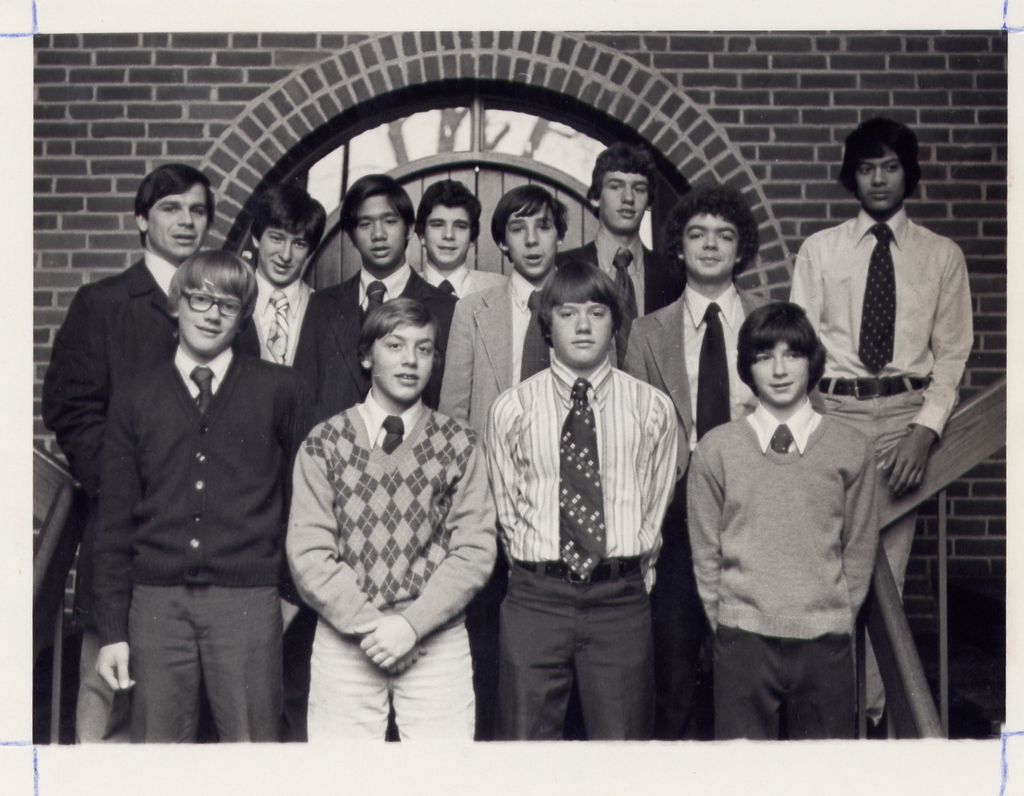
One of the ways in which culture and the transmission of culture have changed dramatically over the past century has been through the ways men and women are prepared for the responsibilities of their adult lives outside of the context of the family. In the not-so-distant-past, it was common for boys and girls who were entering adolescence to be taught in educational environments among members of their own sex and, largely, by members of their own sex. According to the National Center for Education Statistics, while co-education is the norm in public education in the United States, 96% of all private schools and 72.5% of all private secondary schools in the United States are also co-educational. Out of private secondary schools, all-girls schools make up 11.8% and all-boys schools make up 15.8%.8
One of the claims of Gravissimum Educationis is that all human beings have an inalienable right to an education adapted to the sex of each student.9 In the course of a few paragraphs, my aim on the 60th anniversary of GE is to review official ecclesial guidance on the question of the education of the human person with regard to sexual difference and to provide some commentary on this guidance for the present situation. This is timely as more parents and schools consider the benefits of providing for single-sex environments, especially in middle school and high school years. In education researcher and writer Grace Chen writes, “One of the fastest-growing trends in the educational landscape of twenty-first-century America is single-sex education.”10 In spring 2025, Nina Hankins concluded an advanced policy analysis study on single-sex education, “Promises and Pitfalls of Single-Sex Education: A Study Conducted for the American Institute for Boys and Men.” Here Hankins writes, “Public single-sex education has expanded significantly since the 2006 Title IX regulatory changes. Public single-sex schools increased from just two schools in 1995 to 102 by 2022, with additional thousands of co-educational schools offering single-sex classrooms.”11 Her results, along with that of other researchers, supports the idea that boys and girls learn differently, have different needs as they mature, and can more readily thrive if these needs are met. Single-sex schools work to recognize these needs and work for the flourishing of the human person, male or female.
Continuity in Magisterial Teaching
Divini Illius Magistri contains the clearest and most succinct teaching within Catholic magisterial texts warning against co-education and providing the rationale and basis for single-sex environments in education, especially in adolescence. Subsequent pontificates, especially those of Pius XII and John Paul II, have made significant contributions toward developing and articulating the anthropological foundation for the reasons put forward by Pope Pius XI for recognizing and respecting the sexual difference within education. Pius XI did not advocate for an absolute separation of the sexes in society but rather warned against a prevailing movement towards the indiscriminate intermingling of the sexes which, he taught, was bound to do great harm to men and women and to society at large. Regarding such movements, Pius XI wrote,
Equally fallacious and hostile to Christian education is that system of instructing adolescents commonly referred to as ‘co-education.’ Many of its advocates support it either because they do not consider, or because they deny, that man is born vitiated by original sin, while almost all labor under such a confusion of thought so as to regard the legitimate association of human beings as a kind of unformed mass of men and women who are in all respects completely the same.12
In the decades following Piux XI’s foundational document on Christian education, notwithstanding the groundswell of Catholic institutions embracing co-education of adolescents, the Catholic Church has never abrogated or denied the wisdom found in his warning against co-education. As a demonstration of how this document affected ecclesial policy in the mid-twentieth century, one can look to an official decision from the Vatican on this topic. In 1958, only seven years before GE was promulgated, the Vatican’s Congregation for Religious, under the authority of Pius XI’s successor, Pope Pius XII, “decreed that no member of a religious order might become the head of a secondary-grade co-educational school ‘except in case of dire necessity.’”13
In DIM, after having warned the Church against an indiscriminate sexual education of youth based on the error of naturalism, Pius XI articulated a clear and definitive statement on what GE later referred to as “due consideration [given] to the difference of sex.”14 Pius XI warned against indiscriminate mixing of the sexes in educational institutions calling such co-education “hostile to Christian education.”15 He warned that those who would advocate for co-education, especially during the years of adolescence, either deny or fail to consider the effects of concupiscence or that they “suffer from such a disturbance of ideas that they regard the legitimate community of human beings as a kind of unorganized heap of men and women who are the same in all respects.”16 Pius XI was echoing what G. K. Chesterton in 1913 called an inability “to see the difference” between men and women—a social epidemic beginning earlier than we might imagine.17
Anthropological Foundations
Ninety-six years after the promulgation of Divini Illius Magistri, Pope Pius XI’s warnings have played themselves out. In many institutions, as well as in society at large, men and women have lost sight of the value and the gift of their unique way of being in the world—of being a human person who is, through and through, female, or who is, through and through, male. The Church has maintained, through the centuries and to the present day, that there is such a thing as male and female, and that recognizing this difference is critical to the flourishing of men and women in the collaborative enterprise of working together towards bringing to light a civilization of love and a culture of life. Furthermore, the Church has contended, and I contend, that the difference and reciprocity of the sexes must be an explicitly recognized factor in education of the youth for the realization of one’s humanity precisely as either male or female.
Pius XI writes in DIM the contours for a theology of the body when he speaks of the goodness and value of the gift of sexual difference as the foundational truth upon which the Church’s firm teaching against cart-blanche intermingling of the sexes in education is based. The whole point of separating the sexes, according to Pius XI, is to prepare members of each sex for a fruitful collaboration in the family, in society, and in the Church during their adult years.
For the one sex and the other have been so constituted by the wisdom of God that they might complete one another and fittingly unite into one whole within the family and in society, precisely because of that difference of body and soul by which they are distinguished from each other; and this difference, therefore, must be maintained, indeed cherished, in education and training through a suitable distinction and separation corresponding to their ages and conditions.18
Gravissimum Educationis complements this teaching when it states the reason for an education in keeping with the ultimate goal, the ability, the sex, and the culture of each student.19 “For a true education aims at the formation of the human person in the pursuit of his ultimate end and of the good of the societies of which, as man, he is a member, and in whose obligations, as an adult, he will share.”20 One of these most important societies in whose obligations a man or a woman will share is that of the family as either a wife and mother or as a husband and a father, depending on his or her sex.
The Compendium of the Social Doctrine of the Church states, “Man and woman have the same dignity and are of equal value, not only because they are both, in their differences, created in the image of God, but even more profoundly because the dynamic of reciprocity that gives life to the ‘we’ in the human couple is an image of God.”21 In 2004, the Congregation for the Doctrine of the Faith (CDF) headed by Joseph Cardinal Ratzinger, released the monumental document, “Letter to the Bishops of the Catholic Church on the Collaboration of Men and Women in the Church and in the World.”22 It states, “The defence and promotion of equal dignity and common personal values must be harmonized with attentive recognition of the difference and reciprocity between the sexes where this is relevant to the realization of one’s humanity, whether male or female.”23 Attentive recognition of the difference and reciprocity of the sexes is certainly relevant in the area of the education of the youth who are meant to be formed, through education, for a dynamic reciprocity which makes for peace and communion in the family and in the world.
The fathers of the Second Vatican Council stated in GE, “All human beings…—inasmuch as they are endowed with the dignity of a person—have an inalienable right to an education suited to their own end, adapted to their own character, the differences of sex, culture, and national traditions, and at the same time open to fraternal association with other peoples for the fostering of true unity and peace on earth.”24 Later in the same document, they wrote, “Let [teachers] work as partners with parents and together with them in every phase of education giving due consideration to the difference of sex and the proper ends Divine Providence assigns to each sex in the family and in society.”25 These ends, most simply and succinctly put, are the ends of fatherhood and motherhood within the society and within the family. These ends, however, are not meant merely as biological ones but also as human and moral ones. They extend to and are relevant for even those men and women who never enter into marriage and who never have biological children.
Every boy is on his way, potentially, towards full manhood. The specific end of manhood is to become a father. This is done, in the natural course of events, through a total gift of himself to his bride and in the exercise of paternal care and authority for his sons and daughters. In other circumstances paternity is lived out by men who do not marry and who do not have biological children. It is true especially for the man who makes a gift of himself in celibacy for the sake of the Kingdom of God. It is also true of the husband who is not given the gift of biological children in marriage. Pope Pius XII, with unmarried male clergy in mind, wrote the following. “By his law of celibacy, the priest, so far from losing the gift and duties of fatherhood, rather increases them immeasurably, for, although he does not beget progeny for this passing life of earth, he begets children for that life which is heavenly and eternal.”26 One of the marks of mature manhood is the desire for fruitfulness, a sharing in the command of blessing from God who from the beginning says to man, “Crescite et multiplicamini” (see Gen. 1:22). An essential part of educating a boy is to help him to grow into a man desirous of serving and enriching the lives of others, a man capable and desirous of fatherhood.27 This is the man fully alive toward which all boys’ education worthy of its name ought to aim.
In complementary fashion, each woman is ordered to motherhood both biologically and spiritually. It must be said that this does not exclude other ends. Like man, she is created for her own sake, and union with God is her final end as it is for each man.28 What is at the heart of the work of a man and the work of a woman is the wellbeing and flourishing of the human family through gifts that differ and that work complementarily toward fruitful communion in the family and in the world. In parallel to men, Pius XII writes that “the sphere of woman, her manner of life, her native bent, is motherhood. Every woman is made to be a mother: a mother in the physical meaning of the word or in the more spiritual and exalted but no less real sense.”29 Subsequent teaching has made it clear that it is not only that there are two kinds of motherhood, but that motherhood and fatherhood are actually incomplete without the spiritual dimension. The primary task of education of each child is the actualization of spiritual fecundity: spiritual motherhood on the part of women and spiritual fatherhood on the part of men. The Church foresees the reasonable concerns and even dangers that can present themselves when a woman and a man’s identity are seen in light of their capacity for maternity and paternity. Thus, the letter on the collaboration of women and men from the CDF states,
Although motherhood is a key element of women’s identity, this does not mean that women should be considered from the sole perspective of physical procreation. In this area, there can be serious distortions, which extol biological fecundity in purely quantitative terms and are often accompanied by dangerous disrespect for women. The existence of the Christian vocation of virginity, radical with regard to both the Old Testament tradition and the demands made by many societies, is of the greatest importance in this regard. Virginity refutes any attempt to enclose women in mere biological destiny. Just as virginity receives from physical motherhood the insight that there is no Christian vocation except in the concrete gift of oneself to the other, so physical motherhood receives from virginity an insight into its fundamentally spiritual dimension: it is in not being content only to give physical life that the other truly comes into existence. This means that motherhood can find forms of full realization also where there is no physical procreation.30
Thus the Church, in recognizing the sexual difference and the natural ends of women and men, also highlights that these ends are not reducible to mere biological function and are exercised in forms that at first glance may not even appear to be the realization of these ends.
The Church, from the beginning of her proclamation of the Gospel, has maintained and taught the equal dignity of men and women, an idea foreign to Greek philosophy and to many cultures of the ancient world. Pius XII reminds us of this equality but warns that “a man and woman cannot maintain and perfect this equal dignity of theirs, unless by respecting and activating characteristic qualities which nature has given each of them, physical and spiritual qualities which cannot be eliminated, which cannot be reversed without nature itself stepping in to restore the balance.”31
Family as the Primary Place of Education
How can the Magisterium of the Church which speaks of the completion and union of the sexes at the same time advocate for the separation of male and female students in educational institutions? To answer this question we must return to the principle that the family is the primary educational institution, not merely in a chronological sense but in an ontological sense throughout a child’s development. Moreover, the home is meant to remain the primary place of education for each child, even during those years when the child may be attending educational institutions ancillary to the home. The perennially prudent guidance of the Church on this matter is articulated by Thomas Shields in his entry on “Co-education” in The Catholic Encyclopedia, which was published in 1908—twenty-one years before Divini Illius Magistri. Shields writes, “The place for [social mixing of boys and girls] is in the home, under the supervision of parents, who will see to it that their children have the right kind of associates, and will not leave them to the chance companionships which the mixed school affords.”32 Shields anticipates a common objection raised against single-sex education of adolescents today. He writes, “It has often been held that the co-educational system extends to the school the ‘good effects that flow from the mutual influence of mingling the sexes in the family circle’; but this contention evidently overlooks the profound difference between the home situation which associates children by natural ties of kindred, and the situation in school where these ties do not exist.”33
When we think of education of the human person, we must think beyond the contours of those institutions which assist the family in its primary mission. At the same time, the Church commends and promotes those ancillary structures and institutions without which the family itself would often be unable to adequately fulfill its educational mission on behalf of children and adolescents. One of the primary concerns of DIM is to affirm the divinely revealed order of authority, rights, and privileges regarding the relation among the family, civil society, and the Church. “The family,” Pope Pius XI proclaimed, “holds directly from the Creator the mission and hence the right to educate the offspring, a right inalienable because inseparably joined to the strict obligation, a right anterior to any right whatever of civil society and of the State, and therefore inviolable on the part of any power on earth.”34 A pivotal theme throughout GE is likewise the centrality of the family in Christian education. Other educational institutions are considered ancillary rather than primary vehicles for the communication of a Christian culture. This theme, that parents are the primary educators of their children, has been taken up in numerous subsequent catechetical instructions as well as in the Catechism of the Catholic Church. It was a recurring theme in the pontificates of Pope St. John Paul II, Pope Benedict XVI, and Pope Francis. It is taken up again by Pope Leo XIV who writes, “The family remains the first place of education.”35
Educating Men and Women Fully Alive
The predominance of educational environments in which the education of the person is taken up without regard to sexual difference, namely the rise of co-education, is today a de facto rule of how education is undertaken throughout much of the western world. But whether we ought to do more to provide opportunities for boys and girls to attend schools which give due respect to the difference of sex is by no means a closed question. What needs to be asked is whether such environments foster the education of boys into men of full stature and of girls into women of full stature. That is, whether such environments can help to educate men and women fully alive who are able to associate responsibly and prudently with one another in their adult years and who are formed so as to desire the goods of family life, of fatherhood and of motherhood. If fatherhood and motherhood are not seen as paradigmatic goods in the eyes of our graduating students, then something is amiss in our education of the youth.
The Church teaches us in a gentle swell of a refrain that we have the responsibility to educate boys and girls uniquely and that boys and girls have an “inalienable right to an education suited to their own end and adapted to their own character, to the difference of sex,” to each one’s way of being a human being, either male or female. Attention to this difference, and providing learning environments which allow boys to be educated exclusively among other boys and girls to be educated exclusively among other girls, especially in adolescence, is an essential but often overlooked aspect of providing the kind of education worthy of the human person. To bear prophetic witness to the goodness and significance of the sexual difference is part of the task entrusted to the Church during this time of confusion. This means placing the embodied person truly at the center of the educational mission of the Church.36 This is in keeping with an integral and adequate anthropology which is able to educate the whole person, for “Christian formation embraces the entire person: spiritual, intellectual, emotional, social, and physical.”37
Pope Leo XIV invites us to be men and women of our own time without losing ourselves to the shortsighted prejudices of our own age in the process. “The task today,” he writes, “is to dare to pursue an integral humanism that addresses the questions of our time without losing sight of the source.”38 He goes on, “Education is not only the transmission of content, but also the learning of virtues.”39 An important and often overlooked aspect of learning the virtues is learning to enjoy and delight in what is objectively true and good. To have a taste for what is real and beautiful is a mark of an educated man or woman. One of the most significant needs of our time is to communicate the truth that differences between men and women are real and good, and that becoming a man or a woman fully alive requires consistent development of human virtue cultivated in complementary ways for the sake of cooperating in the great mission of the Church, society, and the family.
I am not claiming at all that moving our education towards single-sex environments alone will be enough to educate young men and women in the virtuous life which will help them to thrive and to pursue their God-given vocations. Much more than this is needed. What I do contend is that heeding the witness of Christian paideia may encourage us to see the great value in offering our young men and women the opportunity to grow in virtue as young men and as young women who become capable of what Gaudium et Spes calls a “sincere gift of self” to God, to spouse, to children, and to the world for love of God.40 The final words I would like to give to the fathers of the Second Vatican Council and to Pope Pius XI, who mark out our goal as teachers who work together in the truth to build up each new member of the Body of Christ.
From Gravissimum Educationis:
Since all Christians have become by rebirth of water and the Holy Spirit a new creature(8) so that they should be called and should be children of God, they have a right to a Christian education. A Christian education does not merely strive for the maturing of a human person as just now described, but has as its principal purpose this goal: that the baptized, while they are gradually introduced the knowledge of the mystery of salvation, become ever more aware of the gift of Faith they have received, and that they learn in addition how to worship God the Father in spirit and truth (cf. John 4:23) especially in liturgical action, and be conformed in their personal lives according to the new man created in justice and holiness of truth (Eph. 4:22-24); also that they develop into perfect manhood, to the mature measure of the fullness of Christ (cf. Eph. 4:13) and strive for the growth of the Mystical Body; moreover, that aware of their calling, they learn not only how to bear witness to the hope that is in them (cf. Peter 3:15) but also how to help in the Christian formation of the world that takes place when natural powers viewed in the full consideration of man redeemed by Christ contribute to the good of the whole society. Wherefore this sacred synod recalls to pastors of souls their most serious obligation to see to it that all the faithful, but especially the youth who are the hope of the Church, enjoy this Christian education.41
And Divini Illius Magistri:
The proper and immediate end of Christian education is to cooperate with divine grace in forming the true and perfect Christian, that is, to form Christ Himself in those regenerated by Baptism, according to the emphatic expression of the Apostle: ‘My little children, of whom I am in labor again, until Christ be formed in you.’ For the true Christian must live a supernatural life in Christ: ‘Christ who is your life,’ and display it in all his actions: ‘That the life also of Jesus may be made manifest in our mortal flesh.’ For precisely this reason, Christian education takes in the whole aggregate of human life, physical and spiritual, intellectual and moral, individual, domestic and social, not with a view of reducing it in any way, but in order to elevate, regulate and perfect it, in accordance with the example and teaching of Christ.42
References
- The 60th anniversary fell on October 28, 2025; Pope Leo specifically intended to promulgate his document on the vigil of the anniversary.
- Leo XIV, Drawing New Maps of Hope, apostolic letter (Holy See: October 27, 2025), 1.1.
- Leo XIV, Drawing New Maps, 4.2.
- Leo XIV, Drawing New Maps, 5.3.
- Leo XIV, Drawing New Maps, 4.3.
- Leo XIV, Drawing New Maps, 1.3.
- Leo XIV, Drawing New Maps, 1.2. Paideia [παιδεία] is a Greek word that does not have a direct equivalent in the English language. It involves the formation of the whole person, body and soul, according to the ideal of the human form. For the Greeks, this meant to form the soul and discipline the body toward the end of becoming the perfected Greek citizen, sturdy and well-ordered. Christian paideia has as its aim “to form Christ Himself in those regenerated by Baptism” (Pius XI, Divini Illius Magistri). The word was used by St. Paul in his letters and is often translated as “discipline,” although it carries a much broader and deeper significance than this English word normally conveys. It involves “civilization, culture, tradition, literature, and education” but is not encompassed by these words alone or in simple combination (Werner Jaeger, Paideia: The Ideals of Greek Culture (Oxford University Press, 1939), v.) For a good introduction to the concept of Christian paideia and its relevance to the aims of education today, cf. Daniel Drain, “Education Should Aim at God, Not the Job Market,” Church Life Journal, February 20, 2020.
- Cf. “Table 10. Percentage male enrollment in private schools and percentage distribution of private schools by co-educational category and selected characteristics” in Stephen Broughman, Adam Rettig, and Jennifer Peterson, Characteristics of Private Schools in the United States: Results from the 2015-2016 Private School Universe Survey, National Center for Education Statistics, August 2017. This represents the most recently available data.
- Paul VI, Gravissimum Educationis, declaration of the Second Vatican Council (Holy See: October 28, 1965), 1. “All men of every race, condition and age, since they enjoy the dignity of a human being, have an inalienable right to an education that is in keeping with their ultimate goal, their ability, their sex [sexus differentiae], and the culture and tradition of their country, and also in harmony with their fraternal association with other peoples in the fostering of true unity and peace on earth. For a true education aims at the formation of the human person in the pursuit of his ultimate end and of the good of the societies of which, as man, he is a member, and in whose obligations, as an adult, he will share.”
- Grace Chen, “Why Single-Sex Public Schools Are Growing in Popularity,” Public School Review, September 6, 2025.
- Nina Hankins, “Promises and Pitfalls of Single-Sex Education: A Study Conducted for the American Institute for Boys and Men,” (Berkeley, California: UC Berkeley Goldman School of Public Policy, Spring 2025), 6.
- Pius XI, Divini Illius Magistri, encyclical letter (Holy See: December 31, 1929), my translation of the original Latin text.
- “Coeducation Incurs Vatican’s Disfavor,” The New York Times, March 11, 1958, 7.
- Paul VI, Gravissimum Educationis, 8.
- Paul VI, Gravissimum Educationis, 68.
- Paul VI, Gravissimum Educationis, 68.
- G. K. Chesterton, “Concerning Those Who ‘Cannot See the Difference,’” The Chesterton Review, Volume 23, Issue 4 (November 1997), 407-411. Excerpted from an essay first published in 1913: “It is nowadays quite a mark of culture to say that one can see no difference between a man and a woman, or a man and an angel, or a man and an animal. If a man cannot see the difference between a horse and a cow across a large field, we do not call him cultured; we call him short-sighted. Now, there are really interesting differences between angels and women; nay, even between men and beasts, and all such things. They are differences which most people know instinctively, as most people know a cow is not a horse without looking for its mane; or most people know a horse is not a cow without looking for horns. Whether the difference ought to count in this or that important question is a completely different matter, but it ought not really to be so difficult simply to see the difference.”
- Pius XI, Divini Illius Magistri, 68. Exactly one year after Divini Illius Magistri, Pius XI promulgated Casti Conubii, a beautiful and prophetic document on Christian marriage.
- Cf. Paul VI, Gravissimum Educationis, 1.
- Paul VI, Gravissimum Educationis, 1.
- Pontifical Council for Justice and Peace, Compendium of the Social Doctrine of the Church (Holy See: April 2, 2004), 111.
- Since 2022, this congregation has been renamed the Dicastery for the Doctrine of the Faith.
- Joseph Ratzinger, “Letter to the Bishops of the Catholic Church on the Collaboration Between Men and Women in the Church and in the World,” Congregation for the Doctrine of the Faith, May 31, 2004, emphasis mine.
- Paul VI, Gravissimum Educationis, 1, my translation from the original Latin text.
- Paul VI, Gravissimum Educationis, 8.
- Pius XII, Menti nostrae, encyclical letter (Holy See: September 23, 1950). Cf. Joseph Hirsch, “Every Man is Called to Fatherhood,” Diocese of LaCrosse, 2011.
- Cf. John XXIII, Mater et Magistra, encyclical letter (Holy See: May 15, 1961), 195. Parents have a duty to educate their children toward “a deep sense of responsibility in life, especially in such matters as concern the foundation of a family and the procreation and education of children. They must instill in them an unshakable confidence in Divine Providence and a determination to accept the inescapable sacrifices and hardships involved in so noble and important a task as the co-operation with God in the transmitting of human life and the bringing up of children.”
- Pius XII, Woman’s Duties in Social and Political Life (New York: Paulist Press, 1945), 4. “In their personal dignity as children of God a man and woman are absolutely equal, as they are in relation to the last end of human life, which is everlasting union with God in the happiness of heaven.”
- Pius XII, Woman’s Duties, 8.
- Joseph Ratzinger, “Letter to the Bishops.”
- Pius XII, Woman’s Duties, 8.
- Thomas Shields, “Co-education,” The Catholic Encyclopedia, vol. 4 (New York: Robert Appleton Company, 1908).
- Shields, “Co-education.”
- Pius XI, Divini Illius Magistri, 32.
- Leo XIV, Drawing New Maps, 5.3.
- Cf. David L. Schindler, “The Embodied Person as Gift and the Cultural Task in America: Status Quaestionis,” Communio 35 (Fall 2008).
- Leo XIV, Drawing New Maps, 4.2.
- Leo XIV, Drawing New Maps, 6.2.
- Leo XIV, Drawing New Maps, 5.1.
- Cf. Second Vatican Council, Gaudium et Spes, pastoral constitution on the Church in the modern world (Holy See: December 7, 1965), 24.
- Paul VI, Gravissimum educationis, 2.
About the Author
Dr. Joseph Lanzilotti
Dr. Joseph Lanzilotti joined The Heights School faculty in 2022. He holds a Bachelor of Science degree in Biology with a second major in Philosophy from DeSales University, a Master of Arts degree in Theology from Ave Maria University, and a Doctor of Philosophy (PhD) degree in Theology from the Pontifical John Paul II Institute for Studies on Marriage and Family. Having grown up in rural New Jersey, Dr. Lanzilotti developed a great love for the natural world. He is a beekeeper and gardener. He enjoys trail running, swimming, and skiing. Joseph and his wife, Caeli, have a two-year-old son. They reside in Reston, VA.