

Sections
There Is No Manual
All people are born as originals but many die as photocopies.
—St. Carlo Acutis
In theory, theory and practice are the same. In practice, they are not.
—Yogi Berra
The following essay first appeared as an article in Alvaro de Vicente’s Substack publication, Men in the Making. For more articles like this one, you can visit his page here. Subscribe to the publication to stay up-to-date on Alvaro’s writing.
A universal experience of parenting is that there is no single universal experience of raising children. As new parents quickly discover, no matter how many books they have read about taking care of an infant, the only real way to learn is on the job. As experienced parents with many children know, even when most external circumstances are the same, each child can turn out quite differently. Even parents of identical twins attest to this.
This radical variability flows from the fact that a boy is not a machine, the operation of which can be reduced to a set of how-to instructions for assembly; nor is he a tree, which is expected to react according to patterns of growth, predictably responsive to external elements; nor is he a subrational animal, which can be trained to perform functions by following a program.
At the risk of sounding obvious, a boy is a human. He is a rational animal with a mind of his own and, therefore, a will which no one but he can control. Even more, each boy is different and affected by several variables: his temperament, his parents’ temperament, the environment in which he grows up, the friendships he makes, the social circles in which he operates, his daily interactions, and so forth. Most importantly, having a soul directly and uniquely created by God, he possesses a unique individuality which is perhaps impossible to put into words.
Because of this, no single, infallible, universal approach exists for raising a boy. There is no manual for raising boys (or girls, for that matter). There are certain truths that apply universally, but such universals, which exist in abstraction, take a multiplicity of forms in particular, lived, real, historical circumstances. Real boys do not exist in the realm of Platonic forms; they are embodied and irreducibly unique.
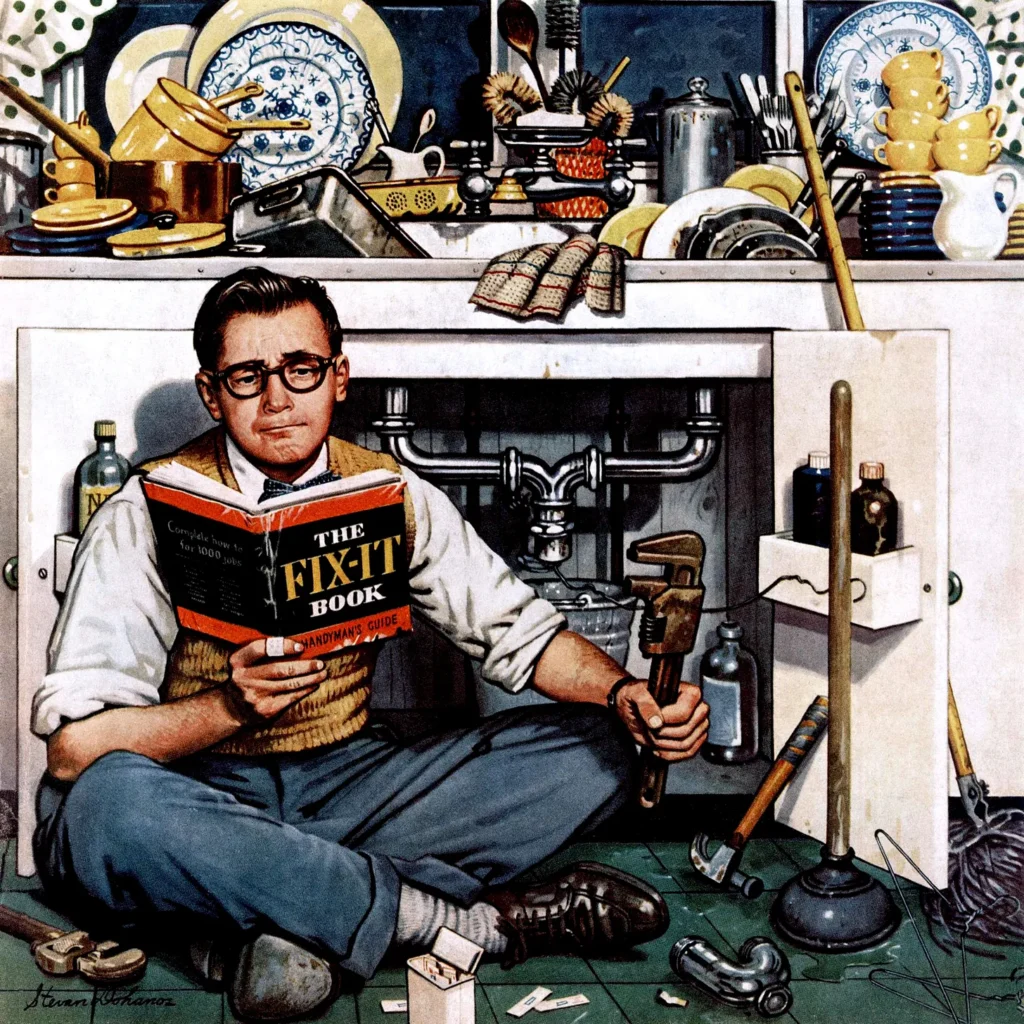
With this in mind, my goal in lecturing and writing about boys’ education isn’t to dictate what you, as a parent or teacher, ought to do. My intention is to give you ideas to ponder by sharing experiences—both my own and those gathered from working with thousands of parents over the decades. In some cases, the advice comes from universals learned by studying human nature: boys want to be loved and respond well to those who love them. In other cases, the advice comes from truths conveyed over the centuries that are clearly applicable today: wealth and material possessions tend to spoil children. And some advice comes from observing contemporary patterns: no middle school boy should be given a smart phone.
But most questions are particular to each child: one may be able to exercise judgment over a smartphone at sixteen and another may not. One may benefit from participating in competitive sports outside of school and another may not. One should take the more demanding academic schedule and another should not.
As you seek to educate the real boys in your lives, doing so without a manual, here are three axioms to follow:
- Ask for reasoning, not just conclusions;
- Direct, manage, counsel;
- Become a studio assistant.
Ask for Reasoning
No one can tell you exactly how to raise your child, nor should you let anyone. You should, of course, be docile and open to the wise counsel of others, particularly those with experience and expertise. Not infrequently, however, those with experience and expertise give different answers to the same questions.
When getting advice from others, then, more helpful than specific prescriptions will be to learn what another’s reasoning is for their specific advice. Gathering reasoning, and not just conclusions or specific rules, will allow you to weigh whether the ideas apply in your particular circumstance.
Direct, Manage, Counsel
Ultimately, raising a boy is not training a young man but accompanying him through the early stages of his life journey. This is crucial work, as the early stages of one’s life inform—without determining—how he will walk the rest of the path. Our accompaniment is directive when the boy is very young, increasingly managerial as he enters high school, and becomes consultory as he leaves the house.
Being directive trains the child’s outward behavior, fostering good habits and routines. Becoming managerial allows the boy to begin to exercise agency while still being supported by your help. Being consultory allows the boy to fully embrace his freedom while still receiving helpful guidance.
When exactly and what precisely these stages take shape will, keeping with our theme, depend on the boy. To accompany a boy well, you need to know your boy very well—not boys in general, but this boy, your son, in particular.
Become a Studio Assistant
Though general ideas and frameworks based on statistics and empirical studies are certainly helpful—as they inform one’s prudence—raising a real child requires every parent to become an artist in his own right. No one can give you the playbook for raising your child; you have to write it.
Even better, it requires every parent to become a skilled studio assistant, for each child is a distinct and living work of art, and it is God who is the master artist. We are his assistants.
Because of this reality, parents and educators do well to remember that we do not determine a boy’s end for him. In fact, he does not even determine it for himself. He discovers it; and we help him down the path to realizing it. We ought to hold a loose grip on overly specific ideas of who he will become, lest our attachment to a predetermined idea of what his path ought to be pose an obstacle to helping him follow the actual course that God has laid before him.
Though we need to have a vision of the kind of man a boy ought to become—what a real man is—this idea, if it is to remain true, must be broad enough to encompass a wide range of specific embodiments of the vision. For example, I have often told prospective parents that the goal of my school is to graduate the kind of man you would want your daughter to marry. This idea has certain universal lines, but it remains sufficiently broad that there are many ways to practically realize it.
Boys, Not Boyhood
In short, real love is always particular; education is an art, not a science; and prudence, not technique, is the governing virtue of good parenting. Therefore, raising boys is not a matter of following a manual. It is a question of knowing and loving the boy—this boy—and the end to which that boy aspires.
This is not easy. Indeed, far easier would it be to know and love “boyhood” in general. Dostoevsky presents the trap quite famously in his Brothers Karamazov:
The more I love humanity in general the less I love man in particular. In my dreams, I often make plans for the service of humanity, and perhaps I might actually face crucifixion if it were suddenly necessary. Yet I am incapable of living in the same room with anyone for two days together.
Only when you seek to know and love not boyhood in general, but your boy in particular, will the “how to” questions be helpful.
About the Author
Alvaro de Vicente
In addition to his responsibilities as headmaster of The Heights, Alvaro acts as a mentor to high schoolers, and teaches senior Apologetics.