

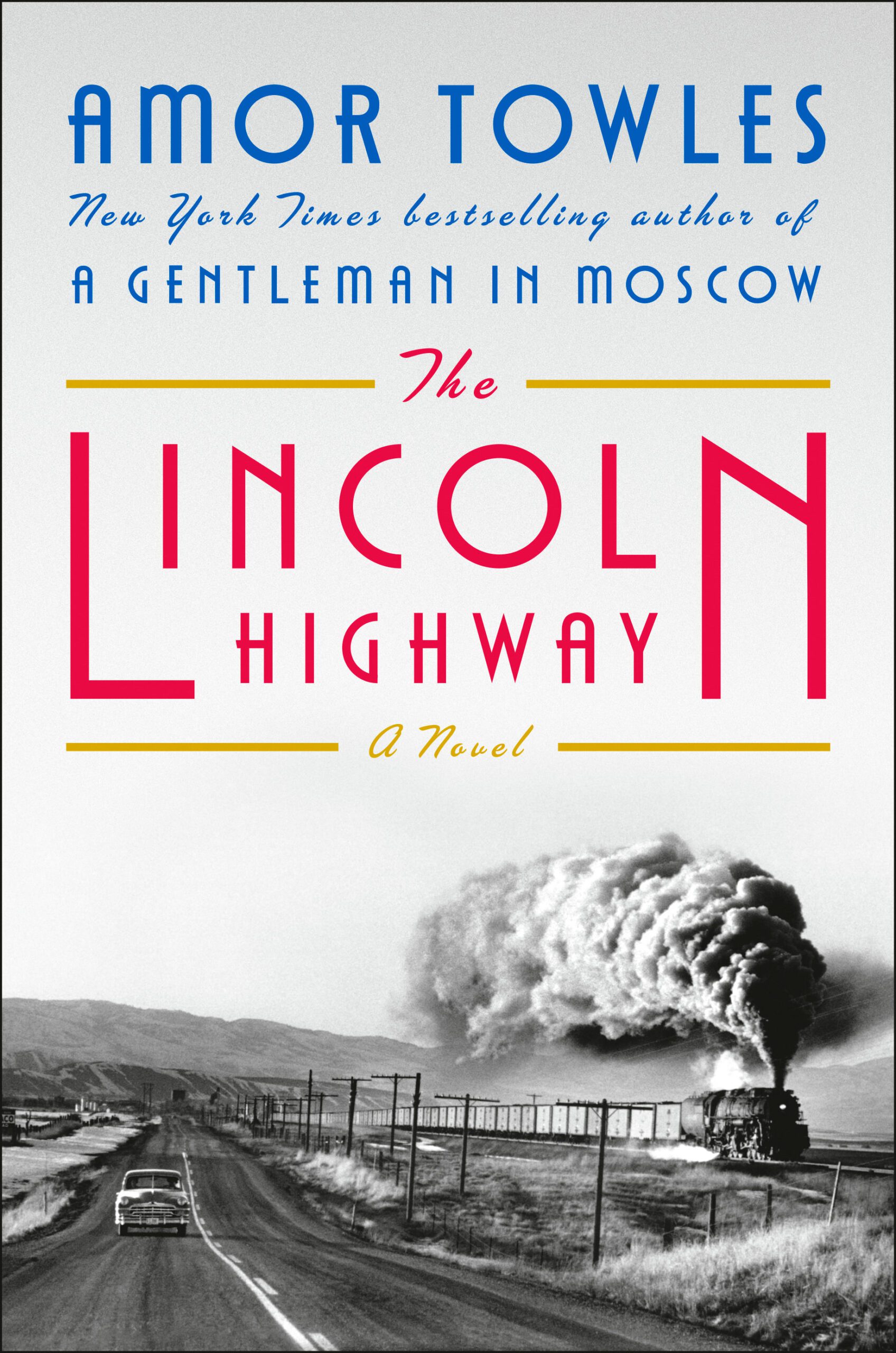

After a stint in a Nebraska prison over an accidental killing, Emmett Watson prepares to start fresh in California with his wide-eyed eight-year-old brother, Billy, for whom the world is a story. Their plans go south—or east, rather—when jail-mates Duchess and Woolly, an Artful Dodger and his simple-hearted friend, hijack the mission in more ways than one. The journey that unfolds is as hilarious as it is anxiety-inducing. The long-suffering Emmett and his earnest kid brother make for two poles of relative stability in a world that Duchess and Woolly—both charming, each broken in his own way—threaten to turn upside down. But all this chaos may conform to a hidden order, a secret logic only visible to boyish hearts.
Set in 1954 America, The Lincoln Highway feels like historical fiction with just a pinch of something else. Call it “semi-surrealism.” Its characters aren’t just embarking on an epic journey set in modern times—some of them become conscious of its inner logic. They see the plot that they are in! The novel itself is structured in ten parts, counting down, and a passage suggests that one of its characters is also the story’s author. There’s even a slant reference to another famous book about characters stepping into their own stories, which, I happily note, no other reviewer seems to have noticed. See if you can find it between pages 425 and 429 (paperback edition).
Naturally, a book like this offers its own reflections on God, virtue, and the meaning of life. Though tinged by Christianity, The Lincoln Highway’s perspective seemed to me more Stoic than Christian. That is to say, there is a God in Towles’ world, even an active God, but what powers his characters’ major moral decisions is not so much supernatural grace as personal grit. A semi-Pelagian God, then. Considered as a whole, The Lincoln Highway is a fine modern novel whose author does not spoil the book by revealing all its secrets. What, for example, should we make of Towles’ decision to tell each chapter in third-person limited, except for Duchess and Sally’s chapters, which are told in first-person? That mystery is one of several that seem answerable, but which Towles’ leaves tantalizingly unanswered.
Prospective readers should be aware that the book contains some adult elements, such as a scene that takes place in a brothel. Nudity is mentioned, but no specific sexual acts are depicted. Drug-abuse and foul language make occasional appearances, and there’s an instance of self-harm, but none of this is framed in a way as to morally normalize it. I recommend Amor Towles’ The Lincoln Highway for audiences of sufficient maturity.