

This is a tricky question for a number of reasons. If you read theologians such as Thomas Aquinas, you will find the virtue of faith articulated in all its intellectual and revealed purity. Coming from the First Truth, which is God, there is no shadow of falsity in the Faith as revealed by the Lord himself in Scripture and Tradition. And shouldn’t we expect this? The Father of Lights couldn’t give us any gift that leaves us entirely in darkness; his gifts are mysteries that shine light on our world. While this is true, there’s another way to consider how God invites his creatures into his very life.
If you read Scripture, you will find a narrative of faith as lived by nearly countless individuals from Adam and Eve in paradise, to the prophets and kings, to the Apostles themselves, shepherding their flocks of the early faithful. These narratives are far from idealistically portrayed. We get brother killing brother, whole cities annihilated, Jacob wrestling with an angel, Lot’s wife, King David, Solomon’s mysterious end, to say nothing of Peter’s denial, Judas’ betrayal, and the scoundrels St. Paul had to deal with in Corinth, a city known for its indulgent and fractious characters.
Aquinas had a real mastery when it came to commenting on Holy Scripture, so I don’t mean to say he was ignorant of this pretty obvious distinction: the intellectual definitions of our Faith, and the way it is lived in these accounts in sacred history. This tension isn’t really a conflict but a sign that something has been given to us so we can live it here and now, which means in times of joy and sorrow, in days of loneliness and days of the joys of friendship, under clear skies, and amid the raging tempests of the essential mysteries of life.
We can consider faith as both content and virtue, the means of believing and the object too, what or whom we believe. This two-fold aspect of the word “faith” is partly because God has given us faith in order that we may call on him, may befriend him, as he truly is, unmixed with errors about his nature. With faith as a virtue, we reach out trustingly to God; with faith as a doctrine, we know we are reaching towards the truth of who God really is as he has revealed himself to us.
“Lord I do believe; help my unbelief.” (Mark 9:23-4) This verse shows us clearly, in real time, as it were, how faith as a virtue yearns for completeness, for perfection. Faith becomes the basis for a relationship between our brokenness and God’s mercy. The man with the possessed son has accepted an incipient faith in Jesus; he cries out for more faith in his desperate need. In this way, we see that the virtue of faith exists in various degrees, and being a divine gift, may be asked for from God, who infuses this virtue directly into the soul.
How does this narrative of faith as a virtue, its interior dimming and brightening, work specifically in our contemporary world? Are the dilemmas of life itself enough to throw us off the way of faith? Is the Faith mainly a set of ideas in a world of a million contradictory ideas? What happens if we don’t feel that the Faith is true anymore?
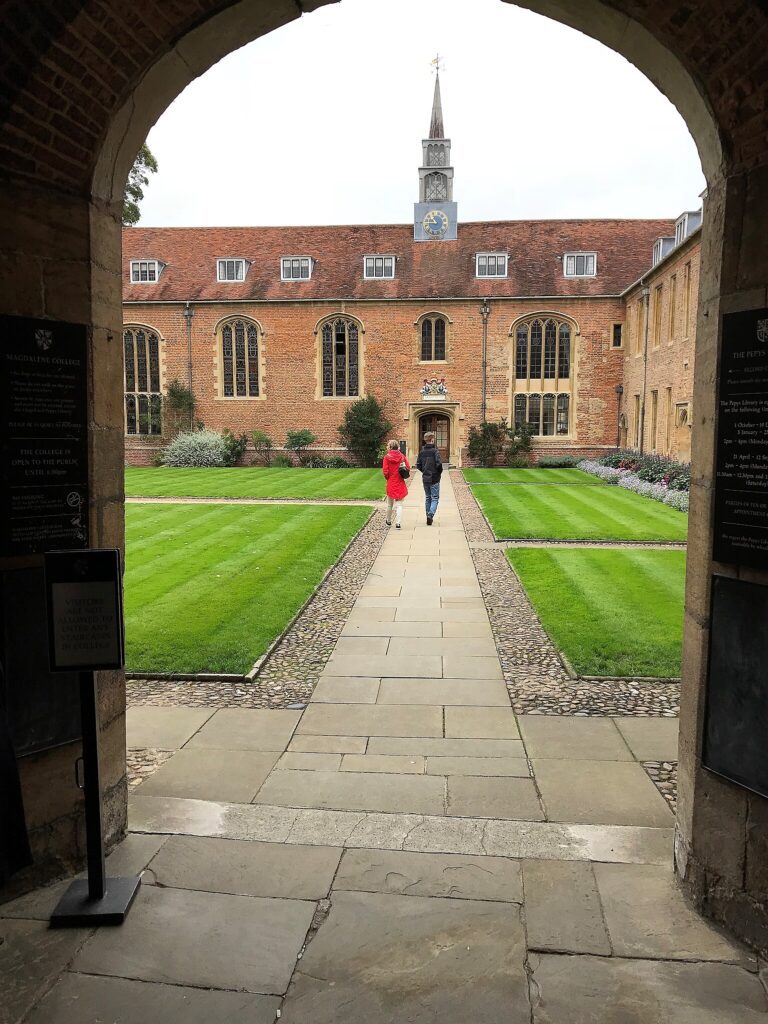
Since 2014, Eamon Duffy has been Emeritus Professor of the History of Christianity at Magdalene College in the University of Cambridge. He is the author of The Stripping of the Altars: Traditional Religion in England 1400-1580 (1992), considered the most significant study of pre-Reformation religion in England. Prior to Duffy’s work, the conventional view was that the English people accepted not only the break with Rome under Henry VIII, but also the introduction of Reformed theology and a vastly simplified liturgy shorn of any notion of sacrifice. Duffy looks into parish records, marginal notes in devotional books, and individual accounts of the changes and finds a very different story: the English loved their Catholic processions, their prayers for the souls in Purgatory, the rich religious devotions that suffused their everyday life. The widely celebrated scholarship of this study certainly contributed to Duffy’s appointment as President of Magdalene College in 2001.

In 2004, Duffy published a collection of essays, Faith of Our Fathers: Reflections on Catholic Tradition. This collection, as one would expect from a historian, is critical of simplistic readings of the long past and even the recent past. Duffy advocates a recovery of “a sense of the variety and richness of the Christian past as a resource for the Christian present.” One senses here a man acutely sensitive to the inadequacies of ideology when dealing with history, ecclesiastical or otherwise.
This volume is full of provocations and challenges, but I find the opening essay the most intriguing. Here we find an account of Duffy’s own struggles to believe. The essay is an extract from an address delivered in May 1985 in which Duffy gives voice to a powerful account of his loss of faith in God and its gradual, agonizing recovery. The title is “When Belief Fails.” It’s both an inspiring and bracing read.
Born in Ireland, Duffy was raised in “total saturation in Catholic subculture.” He writes: “I wallowed [in it] because I loved it….” Here he met “a world of color, historical resonance, poetry and intellectual vigor way beyond anything else in my provincial Irish upbringing.” Research in church history at university “confirmed all this” and so he wasn’t only religious, he was “successfully religious.” Then, in his final year at Cambridge, he met a retired Anglican priest, a blind man, “a life-giver, full of wisdom,” if a bit eccentric in his humor. In 1972, Duffy got news that the man had suddenly died, and the floor of Duffy’s faith collapsed.
I’ll spare you too much detail from his account, but it is moving. One thing Duffy emphasizes repeatedly is that intellectually, nothing had changed. He could—and actually did—argue persuasively for the truth of Christianity, but these arguments “carried no weight” for him. He concludes: “The death of my blind friend seemed the ultimate rebuttal. He was dead; everything good or bad, would die.” Given his rigorous mind, he could see how Christian values won’t survive without Christ; how righteousness refuses to be reduced to a hobby or a pastime to fill the hours of an otherwise meaningless existence.
It is here in the address that Duffy touches on the key that re-opened the world of Faith for him. All this time, he says, he had still gone on attending Mass:
And it was there, in the celebration of the death of Jesus … that I found something by which I could establish some sort of bearing on my turmoil. For as I knelt there rather numbly, week by week, it dawned on me that the Mass began from the point at which I had now arrived. Here, in ritual grown commonplace to me by long acquaintance, there was an unblinking contemplation of all the ills of humanity … that men and woman die, often horribly, that good is defeated, that power crushes tenderness, that lies swallow up the truth … the Mass proclaimed a celebration…. Out of death … it asserted our right to rejoice. It did so because there had once been a man whose trust in the loving reality that underlay the world was so total that in the face of his own destruction he could still call that reality Father, whose death was not an end to his loving, but the means of its infinite expansion.
Duffy learns at this moment: when we respond to the good, or discuss reality seeking the truth, we are actually “not in philosophy” but “in adoration,” for the underlying truth of all things is “inescapably Personal.” The faith that Duffy rediscovers embraces the horror and the glory of existence because it wells forth from the heart of the world, which is love, God himself.
In 2019, Duffy wrote John Henry Newman: A Very Brief History. It’s a concise, well-contextualized introduction to Newman—now a saint, and recently declared a Doctor of the Church. (Duffy isn’t entirely fair when he cites Newman’s sense of the historical conditions out of which doctrine arises; Newman fought his whole life against such relativizing.) Duffy’s own life as described in the essay above would be quite understandable, I think, to Newman, who had a novelist’s understanding of the close workings of the human heart.
Duffy’s book on Newman has a chapter entitled “Faith and Doubt” which explores the dynamic between faith and reason in the cardinal’s life and particularly his preaching. Here we see something of the uniqueness of Newman’s approach: not only dwelling on the lofty truths of the Faith but also keenly looking at the humanity in whom those truths must live: “Man,” Newman preached, “is not a reasoning animal; he is a seeing, feeling, contemplating, acting animal … the heart is commonly reached by means of direct impressions, by the testimony of facts and events, by history, by description. Persons influence us, voices melt us, looks subdue us, deeds inflame us. Many a man will live and die upon a dogma: no man will be a martyr for a conclusion” (Tamworth Reading Room in Discussions and Arguments, 293).
Duffy rightly emphasizes in this chapter Newman’s focus on the heart in coming to Faith and persevering in it. In a discourse given as a newly minted Oratorian religious, entitled, in fact, “Faith and Doubt,” Newman is sure that “faith is incompatible with doubt.” Doubt for Newman was a pulling away from the grace of faith, the foundation of the life of a Christian, and so he treats it with no little severity: “faith is the consequence of willing to believe,” he says, somewhat curtly. Newman knew well that the life of grace is largely unfelt, and hidden. Our emotions can’t change the reality that it is a gift; it must be freely accepted.
Is there doubt in the life of faith? Newman would say no, strictly speaking. But he would, no doubt, acknowledge that as long as we are pilgrims, there will be times when our faith is tested, sometimes severely, hence the absolute need for prayer, interiority, trusting conversation with God. The great narratives of faith in Scripture surely show us a similar cautionary tale of souls searching, failing, and suffering for the Faith. Newman would, I am sure, approve of Duffy’s continuing to go to Mass as the right move, a witness to a heart searching for God.
Perhaps, in our hyper-abstracted age, we’ve made the Faith simply a set of ideas or concepts, forgetting Newman’s lesson about the whole person’s approach to the real which demands not less but considerably more than our assenting intellect. Perhaps faith purifies us in its own purity, which is of God, and isn’t some analytic problem to be solved. As Duffy says, the Church doesn’t have “pat answers” to every problem in our lives, but she is “a witness to what she knows. That under the mercy of God our perplexities, our failures, our betrayals, our limitations, can open into new freedoms, if we follow the way of Jesus.”