

Yes, they should. Knowing how to cook is practical for yourself, beneficial to others, and hones traits that help in other areas of life. When I say “cooking,” I’m including baking. The two are somewhat different, but the benefits and habits are the same. I would not consider myself a great cook or baker, but the more I’ve done the more they’ve taught me about a good meal and a good life.
The first reason a boy should learn to cook is practical. He should know how to feed himself with something other than mac-and-cheese from a box. Boxed meals or (Heaven forbid!) a steady diet of fast food is bad for your health and your pocketbook. For the price a young man pays for a meal at Chipotle he can make two or three more nutritious meals at home.
It also benefits others, whether now at home or later with roommates. Every young man should have three or four “go to” recipes he can whip up from memory when asked to for the family. It’s the perfect way to help when Mom and Dad are running late or out for the night. It’s also a wonderful way for parents and children to spend time together. Boys especially need something else to be going on when they talk.
Cooking can also be a type of therapy. (“Stressed” is “desserts” spelled backwards.) You have to pay attention when cooking or baking, which means you take your mind off the troubles of life. Making a meal or treats for someone else is a sacrifice, and when we sacrifice for others, we get out of ourselves. It’s a good thing.
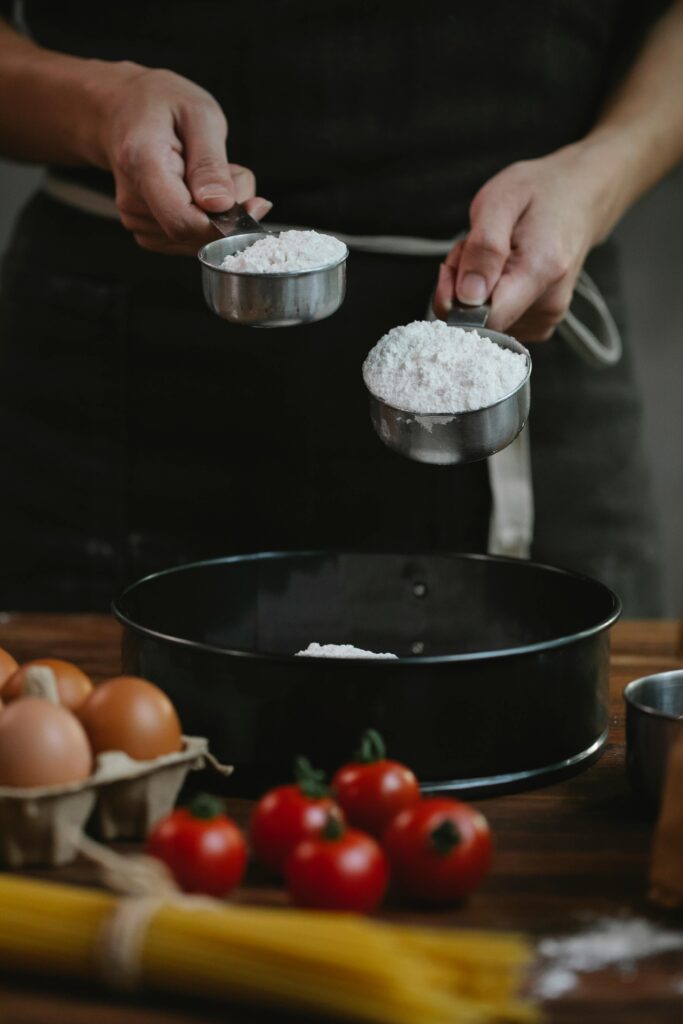
What else can a young man learn in the kitchen? He learns that he must read, understand, and follow directions. Tell me you don’t wish your son could do that? Baking especially requires that you know exactly what you are doing and follow a sequence. It is, after all, a practical form of chemistry. Measurements must be precise; steps must be followed in order. Cooking is more flexible; more of a “variation on a theme.” But even here, you should read the recipe at least three times before you begin. You must understand terms—mince, sauté, knead, par-bake—and know how to execute them.
And stay focused. You must pay attention to details; check off steps as you go along. Especially in the learning stages, don’t think you can be doing something else when preparing a meal. You can’t be checking texts, watching a game, or doing homework. Many meals require precise timing with more than one thing happening at the same time: the pasta is boiling while the sauce is being prepared; the vegetables are being sautéed while the meat is cooking. If you’re distracted, you’ll find yourself saying, “Wait a minute, did I add the salt?” You end up with burnt steak, soggy rice, or uninspired asparagus. Nothing more easily ruins a meal than inattention.
Mise en place is a French culinary expression meaning “everything in its place.” It means having everything ready to go before you start. (The “prep time” given in recipes assumes this work is already done.) Do you? Do you have the right skillet, the proper bowls, the colander, etc. Are the onions diced? Is the chicken trimmed and pounded thin? Are the ingredients measured and separated, ready to put in at the right time? I always add more time than what the recipe says. As with life, things rarely go off without a hitch, so give yourself time for it. “A thing is only as good as the preparation for it,” as the saying goes. Cooking and baking demand that you prepare.
Working in the kitchen teaches the importance of cleaning things properly, keeping them in good repair, and putting them where they belong. Talk about a life skill. You will be derailed and frustrated when you can’t find what you need because someone didn’t put it back where it belongs. Or, when you do find it, you have to clean or sharpen it because the last person didn’t. Good cooks and bakers are notorious for their care of their utensils and the order of their kitchens.
So clean as you go. You may require the same utensil with different ingredients. Do you want the chicken marinade drifting into the salad dressing? As with studying and other work, you will focus better the fewer items you have cluttering your work space. You won’t be distracted by pots, pans, ladles, and spoons lying about, or by ingredients you no longer need. And once you’re done, you’ll enjoy the meal more if you’re not staring at a sink full of dirty dishes.
You learn patience because you can’t hurry a good meal (or anything else good in life). The meat will be cooked when it is cooked, not when the timer goes off. The soup will be ready when all the ingredients have come together, not when it’s been on the stove for so long. You have to cooperate with the circumstances. That is patience.
Cooking and baking develop that intangible quality known as experience. It’s judgment, confidence, and humility. It is achieved, as experience always is, by experimenting, making mistakes, and taking notes. (I always have a printed copy of the recipe for this reason.) The first few times you make something, follow the recipe strictly. You will “bake mistakes.” That’s okay. (There really is no such thing as an inedible batch of brownies.) Remember and learn.
After the fourth or fifth time, the recipe starts to become your own. You learn the difference between cooking with a cast iron skillet or a stainless steel one; between cooking on an electric or gas stove top; between cookies placed on the top rack of an oven or the bottom. You become the conductor and decide what notes to accent and which to tone down; whether to add more or less cumin; whether to use dark chocolate or milk chocolate; whether to use gouda in your omelette or cheddar. (And, as discretion permits, even what wine goes best with your meal.)
Experience extends to learning the importance of what you use. The more you want out of a meal, the more you will go out of the way to put the best into it. There is a difference between the can and the garden, between the store and the farm. Fresh vegetables and herbs, local cheeses, grass-fed beef: these feel different, smell different, and taste different. You will enjoy the meal more and have fewer leftovers cluttering the refrigerator.
Good meals can be simple. I relish a properly fried egg. (Lots of butter and put a cover over the skillet when it’s frying so the top of the egg gets cooked as well.) Chicken picatta is a great, simple “go to.” Salads are easy to whip up. You’ll learn that you don’t need a whole lot to be happy.
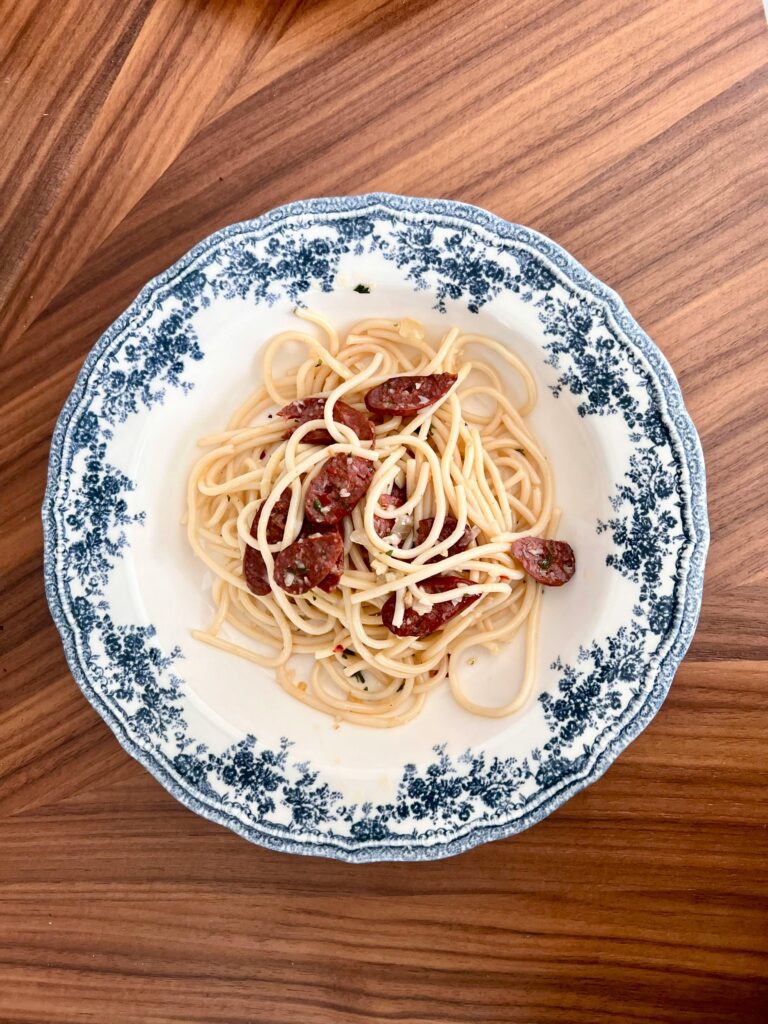
Perhaps the best thing about cooking is not what we can learn from it but what it does for us. As Chef Pierre Gagnaire says, “Cooking is multisensory. It’s made for the eyes, the mouth, the nose, the ear, and the soul. No other art is as complex.” You can’t cook on a screen. There is no such thing as “virtual cooking” or “artificial cooking.” In her book The Extinction of Experience (2024)—which we reviewed in greater depth here—Dr. Christine Rosen discusses how technology has mediated our lives, coming between us and reality. Cooking and baking are the antithesis of this. They pull us back into reality. You get your hands dirty. You have to be aware of what’s in front of you and what is happening. All your senses must be on “heightened alert.” It’s good for the soul.
Finally, you will learn to appreciate a good meal. If you’ve made it for yourself, you get a sense of accomplishment. If you’ve made it for others, you’ll find joy. And when someone makes a good meal for you, you’ll have greater appreciation and gratitude. A great example of this is the movie Babette’s Feast (1987). Accomplishment, joy, appreciation, and gratitude. That’s a recipe for a good life.